We spent 20 years homeschooling our own children and now it is my joy to work with homeschooled students of all ages. This blog's purpose is to share free resources used with students in the past. I hope that you enjoy these learning opportunities as much as I have enjoyed sharing them with my own children and students that I work with now.
The Secret Garden by Frances Hodgson Burnett - Novel Study
North and South by Edith Gaskell (Chapter 22 - A Blow and it's Consequences)
North and South is an excellent way to explore the Industrial Revolution. Edith Gaskell is balanced in her approach as she explores the challenges for workers and owners during this time.
Here are the questions for Chapter 22 of North and South. Chapter 22 is a pivotal part of the novel, and a great opportunity to explore the challenges our characters face. I have included literary analysis, Christian application, compare and contrast writing prompts and creative extension ideas.
If you would like to explore North and South in the miniseries version, many students over the years have learned more about The Industrial Revolution through this series. Here are the links to episode one, episode two, episode three and episode four questions.
I hope that you enjoy this opportunity!
Blessings,
Natalie
Far From the Madding Crowd by Thomas Hardy (Chapter 6 - The Fair - The Journey - The Fire)
Far From the Madding Crowd is a novel about changes of fortune while living in Victorian England. It is the story about Bathsheba Everdene who learns about character and loyalty through her relationships.
Chapter six focuses on Gabriel Oak and his change of circumstances, his diligence and his selflessness. Here are the questions for your High School students based on chapter six of Far From the Madding Crowd. There is literary analysis, Christian application, essay writing prompts with a rubric and extension ideas.
If you are interested in the Movies for Learning session for Far From the Madding Crowd. Here is a link to the questions and the exploration of the movie.
Blessings,
Natalie
The Lost Boys of Sudan; The Long, Long Road to Fargo by Sara Corbett
In the New York Times, the article The Lost Boys of Sudan; The Long, Long Road to Fargo by Sara Corbett, is an excellent way for High School students to put themselves in the shoes of three young men coming from Sudan and immigrating to the United States.
Here is the study for The Lost Boys of Sudan including historical context, literary analysis, critical thinking questions, essay prompts, Christian application and extension activities.
You may want to explore the movie The Good Lie which is also about the "Lost Boys" of Sudan. Here are the questions from a Movies for Learning session on The Good Lie.
I hope that your students are challenged by this study.
Blessings,
Natalie
The Railway Children by Edith Nesbit - Chapter 10 - "The Terrible Secret"
*** my apologies to the first people that downloaded these questions. I have fixed them now***
In Chapter 10, "The Terrible Secret," Bobbie discovers a shocking truth about her father's absence. Bobbie, reflecting on this, decides to question her mother about her father's whereabouts.
Bobbie is heartbroken by the revelation but feels a renewed sense of purpose. She decides that she must do everything she can to help her family.
There are some great themes in this chapter and opportunities for younger students to think about being in Bobbie's shoes.
Here are the questions based on The Railway Children by Edith Nesbit - Chapter 10 - "The Terrible Secret". They include literary analysis, critical thinking questions, short writing prompts, Christian application and extension activities.
Blessings,
Natalie
To Kill a Mockingbird by Harper Lee
To Kill a Mockingbird by Harper Lee is an opportunity for students to explore themes of prejudice, injustice, coming of age and compassion.
It is a story that resonates today with students even though it was published in 1960. The deep themes transcend time and place.
Here is the handout for To Kill a Mockingbird. It includes critical thinking and literary analysis questions, theme analysis questions, essay prompts with rubric, Christian application and possible extension activities.
Students also enjoyed this as a Movies for Learning. Here are the questions for To Kill a Mockingbird.
I hope your students will dive deep into To Kill a Mockingbird.
Blessings,
Natalie
Hachiko: The True Story of a Loyal Dog by Pamela S. Turner
A great true story to explore with your middle school students is Hachiko: The True Story of a Loyal Dog by Pamela S. Turner.
Though it is a picture book, it is still applicable to this age level. There are much to explore, especially around the theme of loyalty.
Here is the handout for Hachiko: The True Story of a Loyal Dog. I have included critical thinking questions, literary analysis, writing prompts, extension activities and Christian application.
I hope that you enjoy this story.
Blessings,
Natalie
The Red-Headed League - Sherlock Holmes - by Arthur Conan Doyle
The Red-Headed League is an excellent way to introduce students to Sherlock Holmes and Arthur Conan Doyle's writing.
Students have enjoyed exploring this story via text but also as a Movies for Learning.
Here is the handout for The Red-Headed League where I have included critical thinking questions, literary analysis, writing prompts which focus on the story, extension ideas and Christian application.
I have also added in a short summary of Arthur Conan Doyle and the time that Sherlock Holmes and perspective of the time that The Red-Headed League was published.
Here are the questions for The Red-Headed League Movies for Learning.
Enjoy!
Blessings,
Natalie
The Most Dangerous Game by Richard Connell
There is so much for students to explore in the short story by Richard Connell, The Most Dangerous Game.
In this student worksheet I have included literary analysis, critical thinking questions, essay prompts, Christian application questions and possible extension activities.
This story will challenge students through the characters of Rainsford and General Zaroff. They will explore questions of civility and savagery. They will look at what happens when our moral compass is lost.
The classics are such because of their timeless themes. I hope that your students will enjoy their study of The Most Dangerous Game!
Blessings,
Natalie
Shipwrecked - an excerpt from Kidnapped by Robert Louis Stevenson
Kidnapped is a classic that has many aspects of human nature as we follow David Balfour being sold into slavery, shipwrecked and fighting back for his inheritance.
There are many themes in the novel from betrayal and justice to historical conflicts in 18th Century Scotland.
The excerpt, which is at the end of the questions on the handout, gives us a look into David as he struggles, shipwrecked and alone.
Here are the questions for Shipwrecked - an excerpt from Kidnapped. This study includes literary analysis, critical thinking questions, Christian integration and essay prompts. I have also included a rubric for the essay.
Many students have explored Kidnapped as a Movies for Learning. Here is the post. Enjoy!
Blessings,
Natalie
Scout's Honor by Avi
Scout's Honor by Avi is available in this anthology on Archive.org or you could source it in another way. An audio version is available on You-tube.
It is a story about an adventure of three young scouts in Brooklyn in the 1920's. It is great for a Grade 6 student to study.
Here is the handout for this study including literary analysis, character analysis, critical thinking questions, writing prompts, Christian application and extension ideas.
I hope you enjoy Scout's Honor with your students. As always, this study could be adapted for another grade level.
Blessings,
Natalie
All the Light We Cannot See by Anthony Doerr - Novel Study
All the Light we Cannot See by Anthony Doerr is a great book for students to learn more about WW#2 and all of the struggles people have to survive. It is even more challenging for one who is blind.
This novel helps us to learn about resilience, free will and the importance of human connection.
Here is the novel study handout for All the Light We Cannot See. I have included literary analysis, character analysis, critical thinking questions and theme exploration. There are also essay topics (with an essay rubric) and extension activities.
Blessings,
Natalie
Why Reading Classic Literature Still Matters in Today’s Classrooms
In a world of fast-moving media and ever-evolving technology, it might be tempting to view classic literature as outdated or irrelevant. Yet, time-tested stories continue to offer students of all ages invaluable lessons in empathy, critical thinking, and cultural awareness. From the moral struggles of a lonely wooden puppet to the social commentary of dystopian futures, classic literature endures—not because it is old, but because it speaks to what it means to be human.
Let’s explore why classic literature is still worth reading—and how it can powerfully connect with students from Kindergarten to Grade 12.
Why Classics Still Matter
Classic literature offers:
Timeless Themes: Love, justice, courage, and morality remain relevant across generations.
Rich Language: Exposure to varied sentence structures, vocabulary, and literary devices builds strong communication skills.
Cultural Literacy: Students learn about historical eras, societal values, and global perspectives.
Moral Reflection: Many classics prompt students to grapple with ethical questions that strengthen character development.
K–5: Discovering Character, Courage, and Curiosity
At the elementary level, classic stories often teach through allegory, fantasy, and clear moral lessons. They help children develop empathy, resilience, and imagination.
Examples:
“Charlotte’s Web” by E.B. White
Themes: Friendship, sacrifice, the cycle of life
Why It Matters: This story gently introduces young readers to the reality of death, the value of selflessness, and the power of kind words.“The Tale of Peter Rabbit” by Beatrix Potter
Themes: Obedience, consequences, curiosity
Why It Matters: Peter’s mischievous nature and subsequent lessons provide a safe, relatable way for children to reflect on their own choices.“The Velveteen Rabbit” by Margery Williams
Themes: Love, identity, transformation
Why It Matters: This tender tale encourages children to see value beyond appearances and recognize the importance of genuine love.
Grades 6–9: Facing Truth, Identity, and Responsibility
Middle school readers are ready to tackle deeper issues such as justice, personal identity, and societal roles. Classics here provide space for introspection and ethical dialogue.
Examples:
“The Giver” by Lois Lowry
Themes: Memory, freedom, individuality
Why It Matters: This novel invites students to question conformity and the cost of a pain-free, controlled society.“Anne of Green Gables” by L.M. Montgomery
Themes: Belonging, imagination, perseverance
Why It Matters: Anne’s struggle to find her place resonates with students experiencing change and growth, and her passion for life is both inspiring and comforting.“A Christmas Carol” by Charles Dickens
Themes: Redemption, generosity, social justice
Why It Matters: In a world where materialism can overshadow compassion, Scrooge’s transformation reminds students of the value of kindness and empathy.
Grades 10–12: Wrestling with Injustice, Morality, and the Human Condition
High school students are prepared for complex narratives, ambiguous characters, and philosophical inquiry. These texts prepare them for adulthood by sharpening their analytical skills and moral discernment.
Examples:
“To Kill a Mockingbird” by Harper Lee
Themes: Racial injustice, integrity, courage
Why It Matters: Students confront systemic inequality and are challenged to consider how personal convictions shape action.“Frankenstein” by Mary Shelley
Themes: Creation, responsibility, isolation
Why It Matters: The novel poses timely questions about scientific ethics and what it means to be human in an age of advancing technology.“Macbeth” by William Shakespeare
Themes: Ambition, guilt, fate
Why It Matters: Shakespeare’s psychological depth enables students to explore the dangers of unchecked ambition and the burden of guilt.
Bringing Classics to Life in the Modern Classroom
Today’s educators have powerful tools to make classic literature relevant:
Technology: Interactive eBooks, audiobooks, and digital annotations can make dense texts accessible.
Discussion and Debate: Connecting characters’ decisions to students’ real-life choices fosters meaningful engagement.
Creative Projects: Students can rewrite scenes in modern settings, act out pivotal moments, or create visual art inspired by the text.
Conclusion: Literature That Builds a Better Future
Classic literature isn’t about glorifying the past—it’s about preparing students for the future. When students read about Atticus Finch standing for justice, or Anne Shirley dreaming big despite rejection, they are not just reading—they are growing. They are forming opinions, refining their values, and imagining a more compassionate world.
These stories endure because the questions they pose and the lessons they teach are the same ones students will carry throughout their lives.
Let the classics speak. They still have something to say.
Citation:
Sing, Natalie. “Why Reading Classic Literature Still Matters in Today’s Classrooms.” ChatGPT Blog Edition, OpenAI, 28 July 2025.
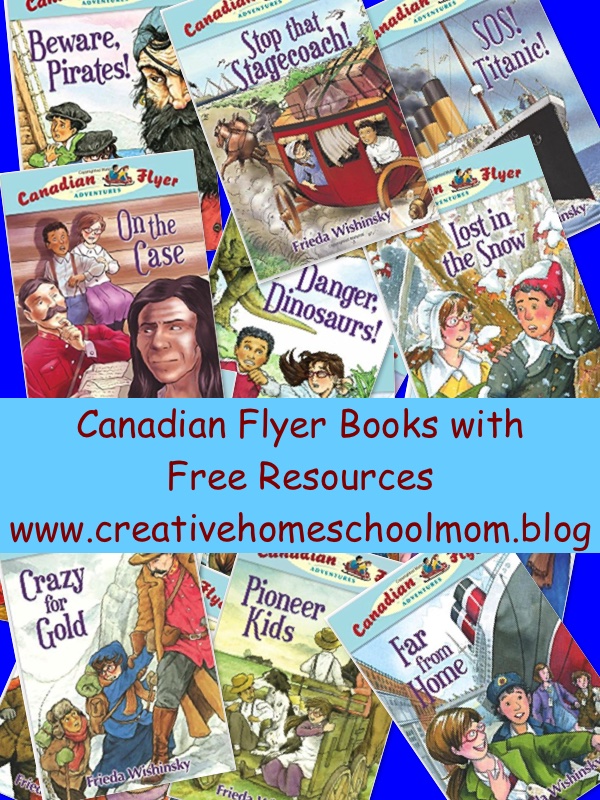
Canadian Flyer Books with Teacher Guide links

With Canada now being over 150 years old, you may want to add some of these Canadian Flyer books into your Canadian History reading! Below are teacher guides from Teaching Books that might help you with some extensions of the books. These books by Frieda Wishinsky are all about Matt and Emily as they get transported to different times and places in Canadian history. This Pinterest Board has many Canadian History and Geography resources and may help you with all of your Canadian history studies. Blessings!
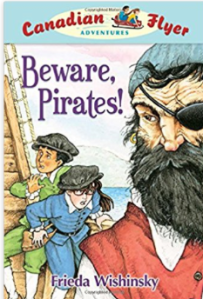
#1 Beware Pirates
In this exciting debut title, we meet Emily and Matt, and are transported back in time with them to the year 1577. Matt and Emily find themselves aboard Martin Frobisher’s ship The Aid, anchored in Frobisher Bay. Adventure beckons!
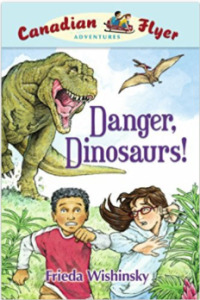
#2 Danger Dinosaurs
This second title in the series fulfills every child’s fantasy of getting up close with a dinosaur — well, maybe not quite this close! It’s off to the Cretaceous period, in the Alberta Badlands. Maiasaura, Lambeosaurus, and T-rex, oh my!
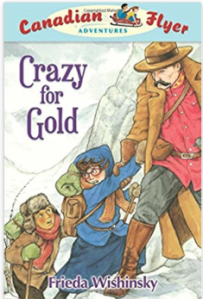
#3 Crazy for Gold
It’s the late 1800s and gold rush fever has taken hold. Matt and Emily join the Klondike gold rush for a rich adventure. Will they find gold or lose their shirts? The people are colorful, the land is rugged, and this adventure is unlike anything else Matt and Emily have ever experienced.
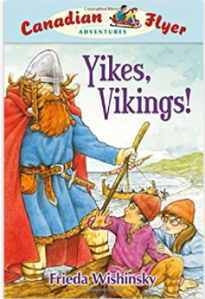
#4 Yikes, Vikings
Matt and Emily have the incredible experience of joining the famous Viking Leif Eriksson and his crew on their historic journey to Vinland in the year 1001. The kids’ ingenuity saves the day when crew members get lost in the new land.
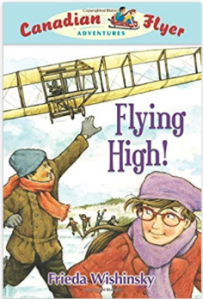
#5 Flying High
On February 23, 1909, before a crowd of astonished onlookers, Alexander Graham Bell’s Silver Dart took flight. Emily and Matt are on hand and caught up in the thrill of witnessing this amazing story of first flight in Canada.
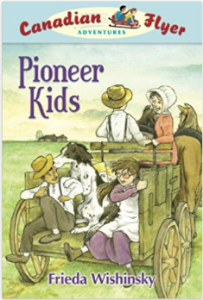
#6 Pioneer Kids
Emily and Matt arrive on the Canadian Prairies in 1910. They visit a one-room schoolhouse where they try to help a new friend deal with a classroom bully. But when a raging fire erupts, it’s Emily and Matt who need rescuing!
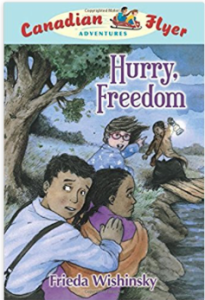
#7 Hurry, Freedom
The Canadian Flyer takes Emily and Matt on their most important journey yet — to the Canada-U.S. border in 1858 to travel along the Underground Railroad. They befriend famous abolitionist Dr. Alexander Ross and a group of runaway slaves he’s helping escape to Canada. With slave catchers in close pursuit, will Emily and Matt be able to help their new friends cross the Niagara River to safety?
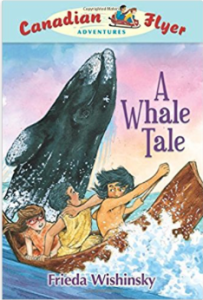
#8 A Whale Tale
It’s 1778, and the sled takes Matt and Emily to the west coast, where they meet a Nootka boy about their age. When he takes them out in a canoe they get close (too close!) to a grey whale. Their actions raise the ire of the Nootka chief, who has enough to deal with, with a visit from Captain Cook that coincides with the kids’ visit.
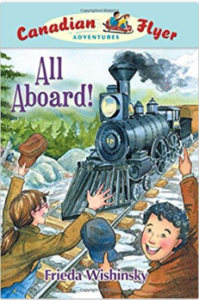
#9 All Aboard
Emily and Matt are excited to land on an old train. What’s more, this one’s heading for Craigellachie, British Columbia, where the last spike will be driven into the rails celebrating the completion of the Canadian Pacific Railroad. Will Emily and Matt make it in time for that historic occasion? Hop on the rails and explore another exciting piece of Canada’s past with Matt and Emily.
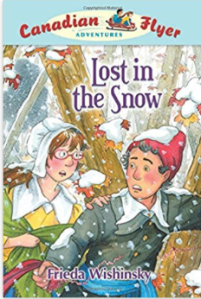
#10 Lost in the Snow
Matt and Emily are off to Quebec in the mid-1600s. There they meet Marie, whose father is about to marry one of the filles du roi, the women the King of France is encouraging to go to Quebec to marry settlers. Marie doesn’t want a new mother. Distraught, she stomps out of her house as heavy snow begins to fall. Emily and Matt race out to follow Marie. Can they find her before she’s lost in the snow?
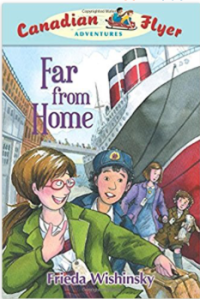
#11 Far from Home
Matt and Emily meet Kate and her brother John on a ship carrying World War II evacuees from Britain.The siblings are worried about their family in England and then John disappears. Can Emily and Matt help find John and help both kids adjust to life in Canada?
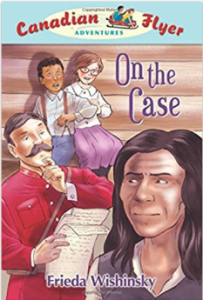
#12 On the Case
Matt and Emily land in a rough, tough western town simmering with tension between the Ktunaxa people and settlers. Will they be able to help Mountie Sam Steele clear two innocent men charged with murder, and stay out of danger themselves?
#13 Stop that Stagecoach
Emily and Matt experience the hardship of pioneer life as they travel through the wild of Upper Canada. They encounter uncharted forests, untamed rivers and rough roads. Will they be able to endure the trip and help their new friend, Thomas, get his mother safely to their homestead before she has her new baby?
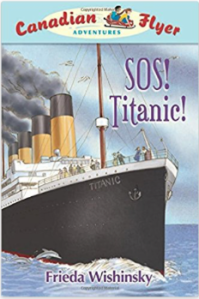
#14 SOS! Titanic!
Friends Matt and Emily land on the Titanic hours before it hits an iceberg. Can they save the ship by telling the captain of its fate?
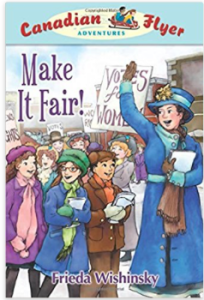
#15 Make it Fair!
In Make It Fair!, Emily and Matt travel to Winnipeg in 1914 and meet Nellie McClung, a woman who was most instrumental in the battle for women's right to vote. They get invited to a play that is being performed a few days from then, a play which Nellie hopes will change everything for women in Manitoba. Can Emily and Matt help Nellie stand up to all the people who want to stop her fight for fairness and equal rights?
Merchant of Venice #3
For our final Merchant of Venice, I asked the students to rewrite the play in a different time frame or reality. We divided our group of 12 into two groups of 6. That gave them enough "players" to put on their presentation for us.
The two groups came up with polar opposite ideas. I gave them a story map from this page to write down their ideas for characters, plot etc. You might be able to find a free one online.
The first group used a barnyard theme with Sheeplock etc.. It was very inventive and had lots of humour.
The second group presented from the point of view of intellectual writers in the 50's-60's era. They had more of a narrative presentation.
What I love about group work is you never know where it will end up. Two groups of students, doing the same assignment and coming up with two totally different ideas to present the plot and characters of Merchant of Venice. Giving students the freedom to create is a wonderful way of exploring what they know. They knew Merchant of Venice very well!
After they presented for us they did a dress rehearsal and our final performance of The Merchant of Venice!
I love these Three Session Literature Learning Camps - it is just enough time to know the literature well, analyze it, do critical thinking exercises and put on the play! I don't think our students will ever forget Fiddler on the Roof, Pride and Prejudice, Midsummer Night's Dream, Tom Sawyer and many others we have done over the years ;)
Blessings,
Natalie